Scaling a designer consultation platform with an e-commerce marketplace / The Expert
15 mil.
Total funding
70k+
Monthly visits
15 mil.
Total funding
70k+
Monthly visits
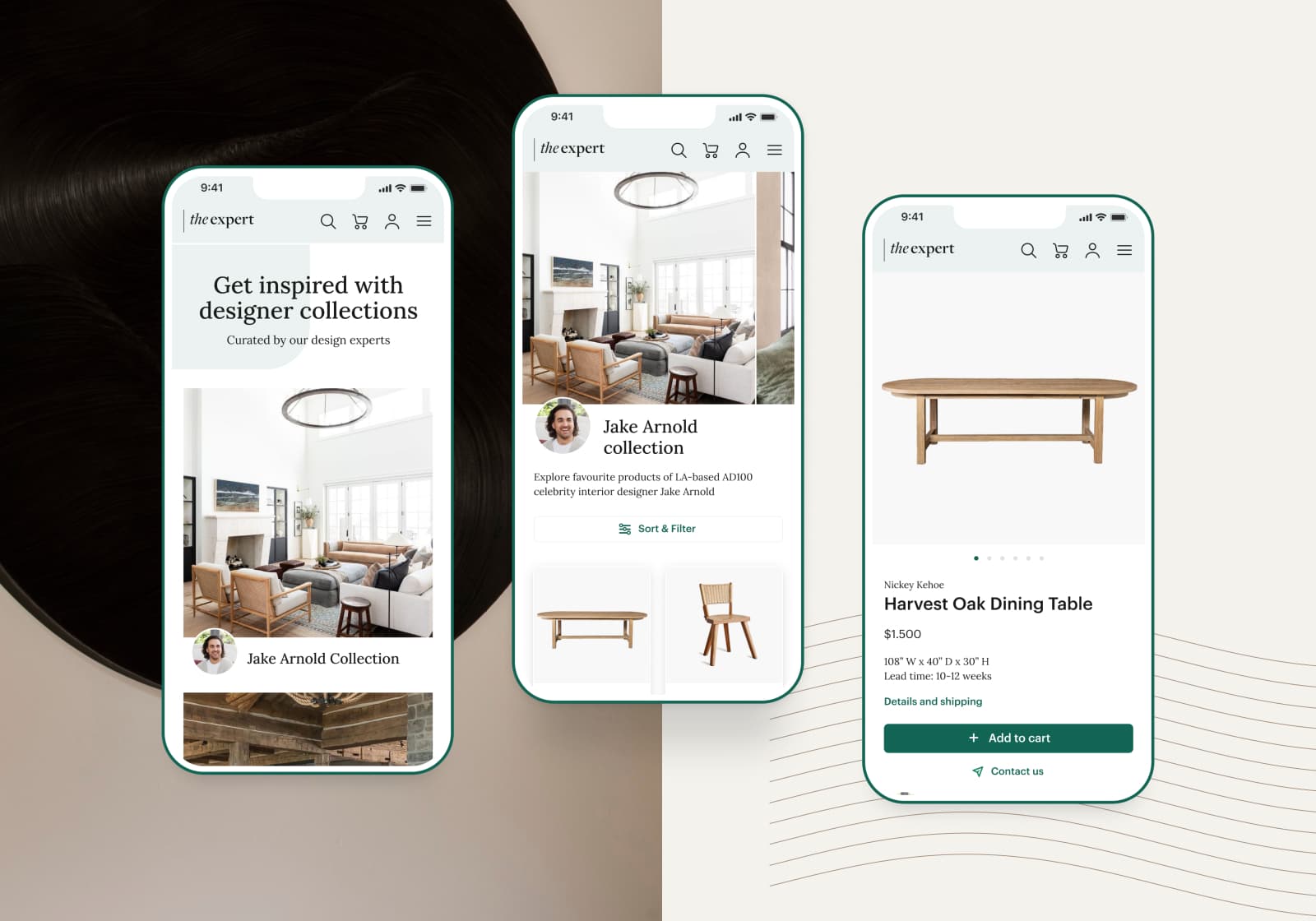
Scope
- UX/UI design
- Product discovery
- User testing
- Prototyping
- Data analysis
- Journey optimization
The Expert is a two-sided marketplace and an online consultation platform that connects interior designers with their clients.
An LA-based startup, founded by the prominent interior designer Jake Arnold, approached Sudolabs (software agency) to build their consultation platform. As part of the later scale-up initiatives to enhance and bring more value for both designers and clients, the team explored an idea of e-commerce implementation.
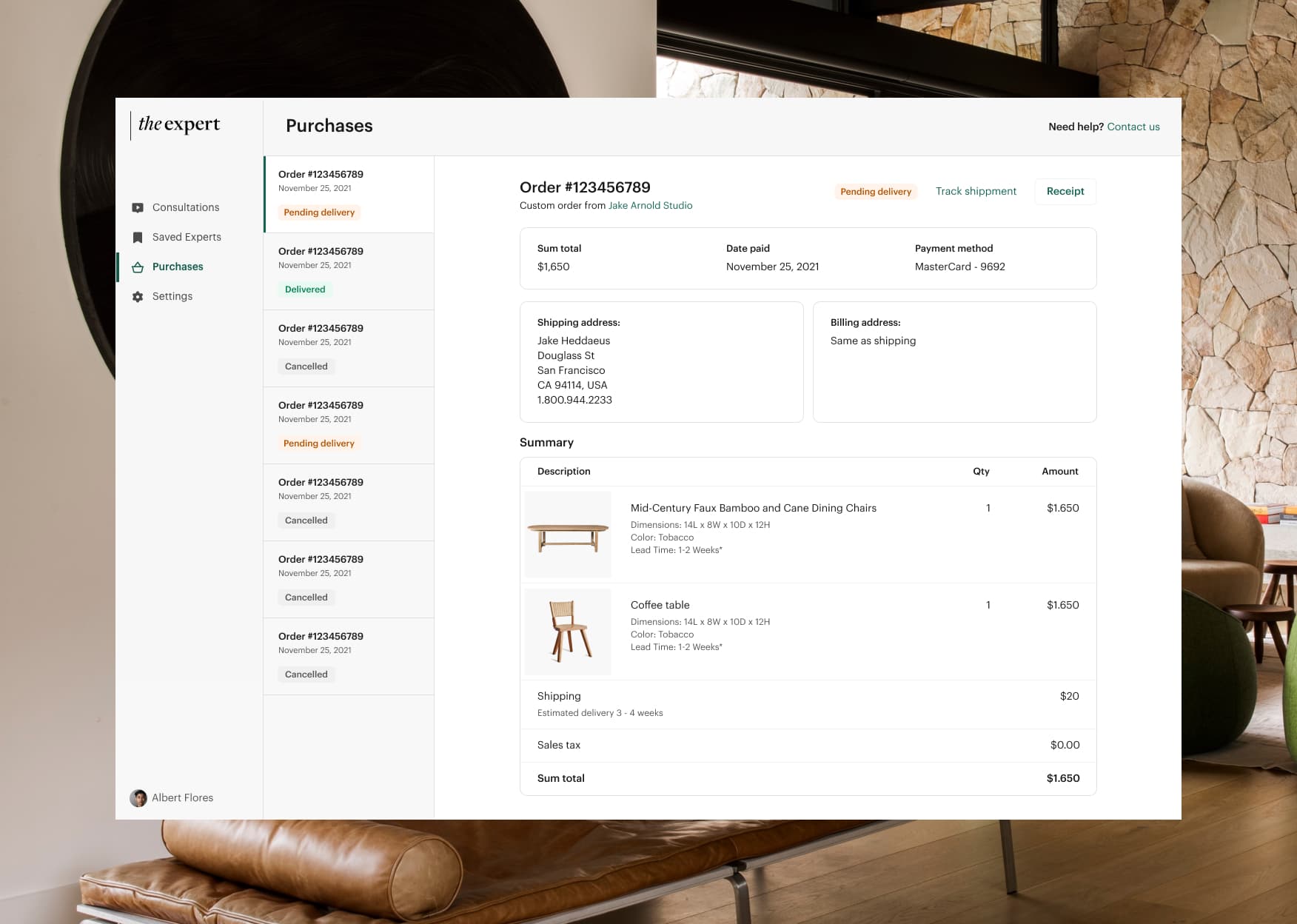
My role consisted of initial discovery, design, prototype testing, and further iteration in close collaboration with the development team, product manager, and an analyst. My 1.5-year engagement allowed me to dive deeply not only into the customer-facing flows, but also a fully fledged admin for e-commerce and website content, as well as integrations with third-party services, shipping, payments, transactional emails, and more.
Challenge: How do we integrate the e-commerce marketplace so it naturally extends the consultation platform and scales with it?
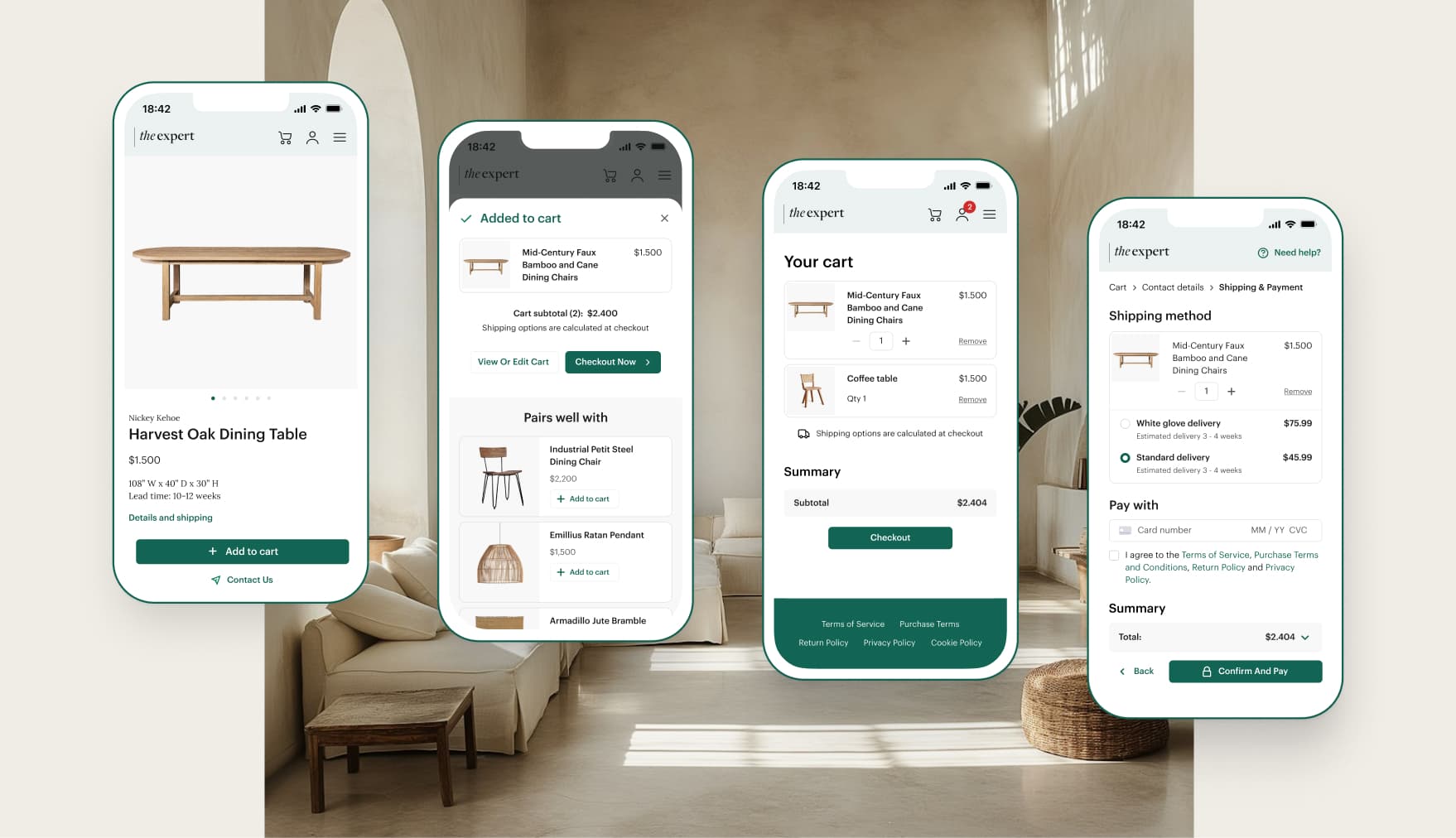
1. Rapid hypothesis validation that brought in $274k in 2 weeks
How do you validate a hypothesis without wasting development? After a video consultation, designers sent summaries and a manual sales email offering free procurement of recommended products.
By testing this way, the team generated enough sales in two weeks to justify building the full marketplace. This mindset makes it possible to pivot quickly, save time and capital, and ensure we only build what the market actually wants.
2. Following the mental models and industry standards
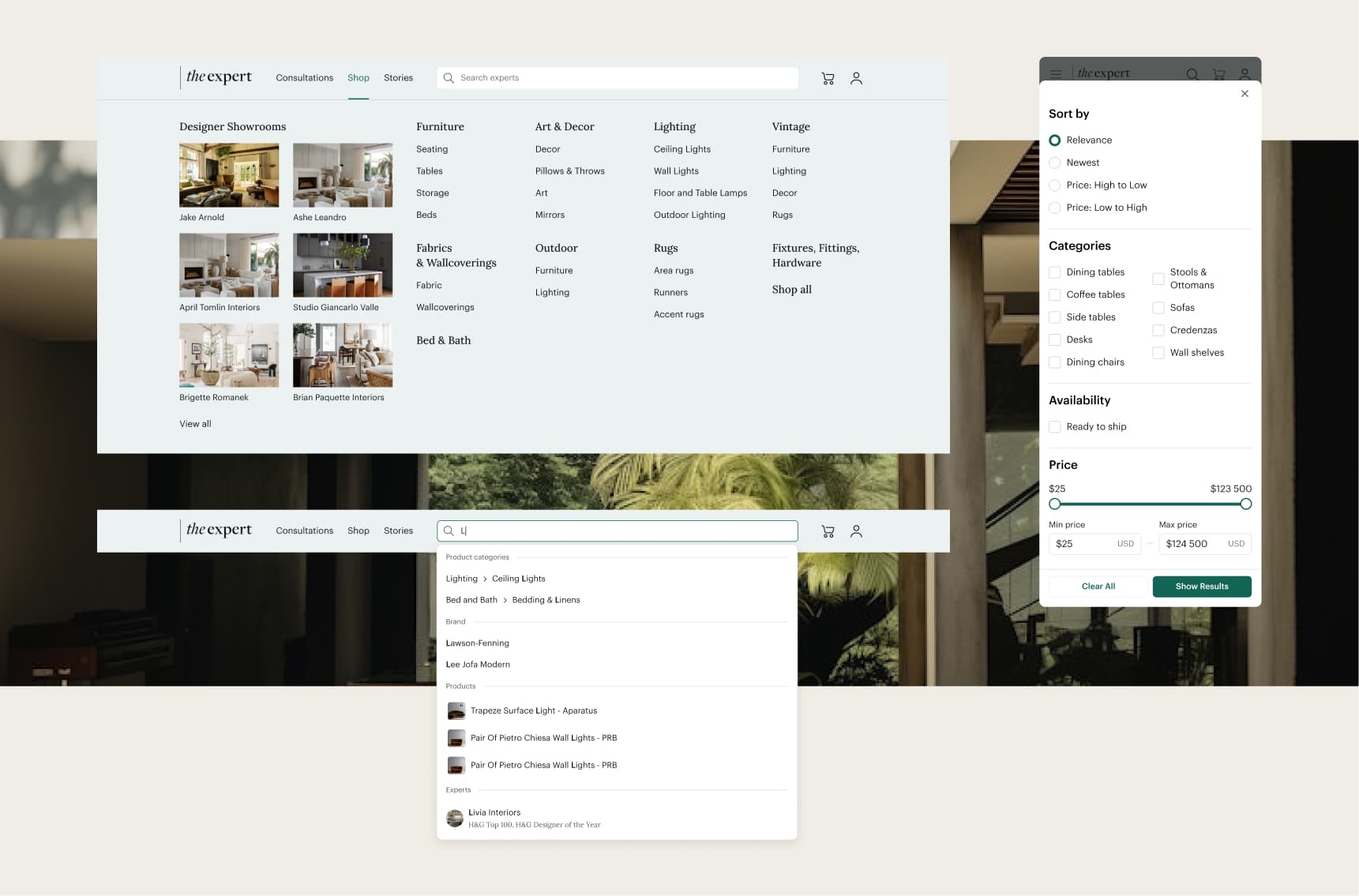
When we set out to build the marketplace, we drew primarily on research from sources such as the Nielsen Norman Group and the Baymard Institute. As Jakob’s Law suggests, people spend most of their time on other sites. Building on patterns that already work elsewhere was a key principle that informed our early design iterations and prototypes.
User testing then uncovered key insights into how people navigate their interior design needs, as well as how they move through the site itself.
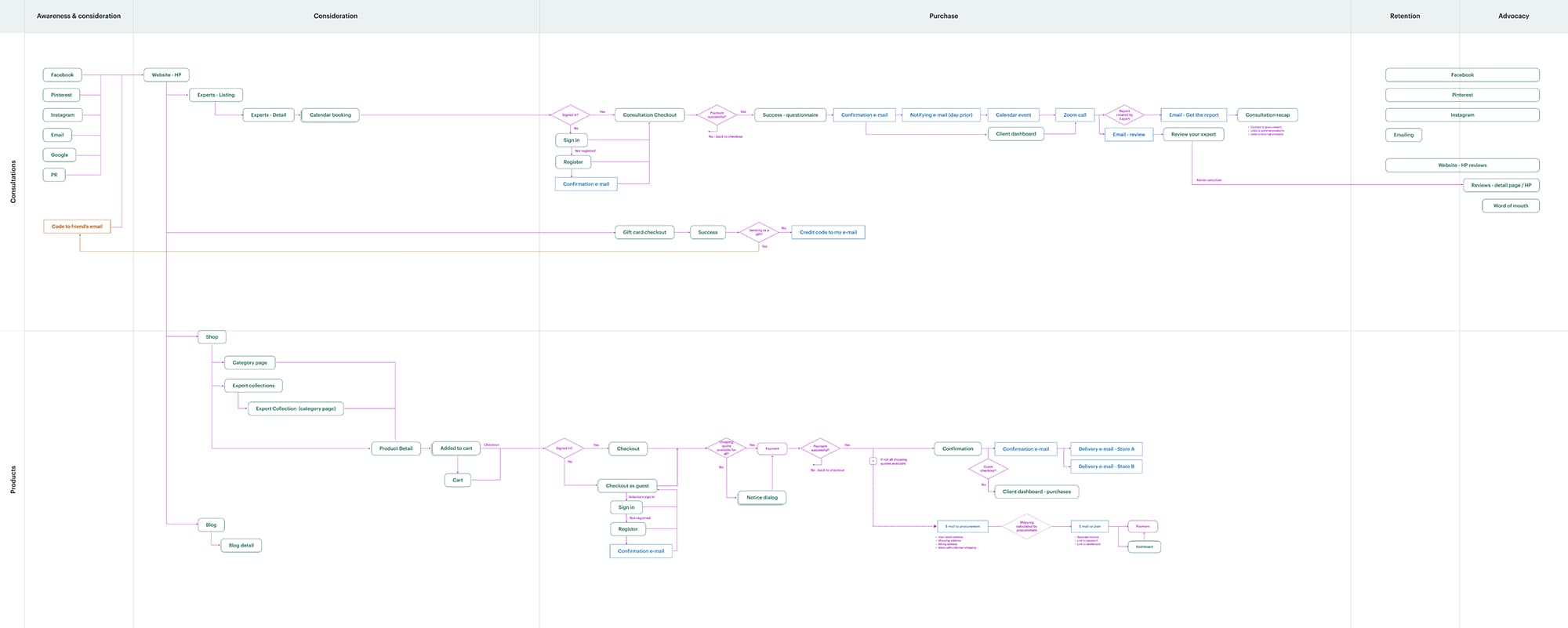
3. The user journey starts way before the user lands on site
Based on our findings, the consultation and purchase funnels needed clearer separation at the top of the journey, during the awareness phase, whether users arrived via the site or external channels. Instead of mixing paths early on, users should be guided into a flow based on their primary need and core job to be done:
- Inspiration: typically happens off-site, on platforms like Pinterest or Instagram
- Consultation: for users who need guidance and an expert to help shape their interior vision
- Shopping: for users who already know what they want and are searching for specific products
Testing showed that these funnels need to stay separate early on and only intersect once users reach a clear milestone within a given flow. Introducing cross-sell between inspiration, consultation, and shopping too early, or mid-flow, created confusion rather than helping users move faster toward their goal.

4. Specificity in UX wins
Marketers and copywriters often experiment with wording or brand names. While it can help with acquisition, it doesn’t always work from a usability point of view.
In our case, the word “expert” felt natural and on-brand. But in testing, people who didn’t know the service weren’t sure what it meant. Was it a customer service agent? An interior designer? That single word created unnecessary confusion. The same was true for the word “Showroom” as a description of the marketplace.
We learned that being more specific in UX writing usually leads to clearer navigation, better understanding, and less friction overall.

5. It is uncertainty that kills conversion
Standard funnels convert only 1-2%. Users drop off when they hit an information gap. To fix this, you must identify the specific questions users ask at each stage.
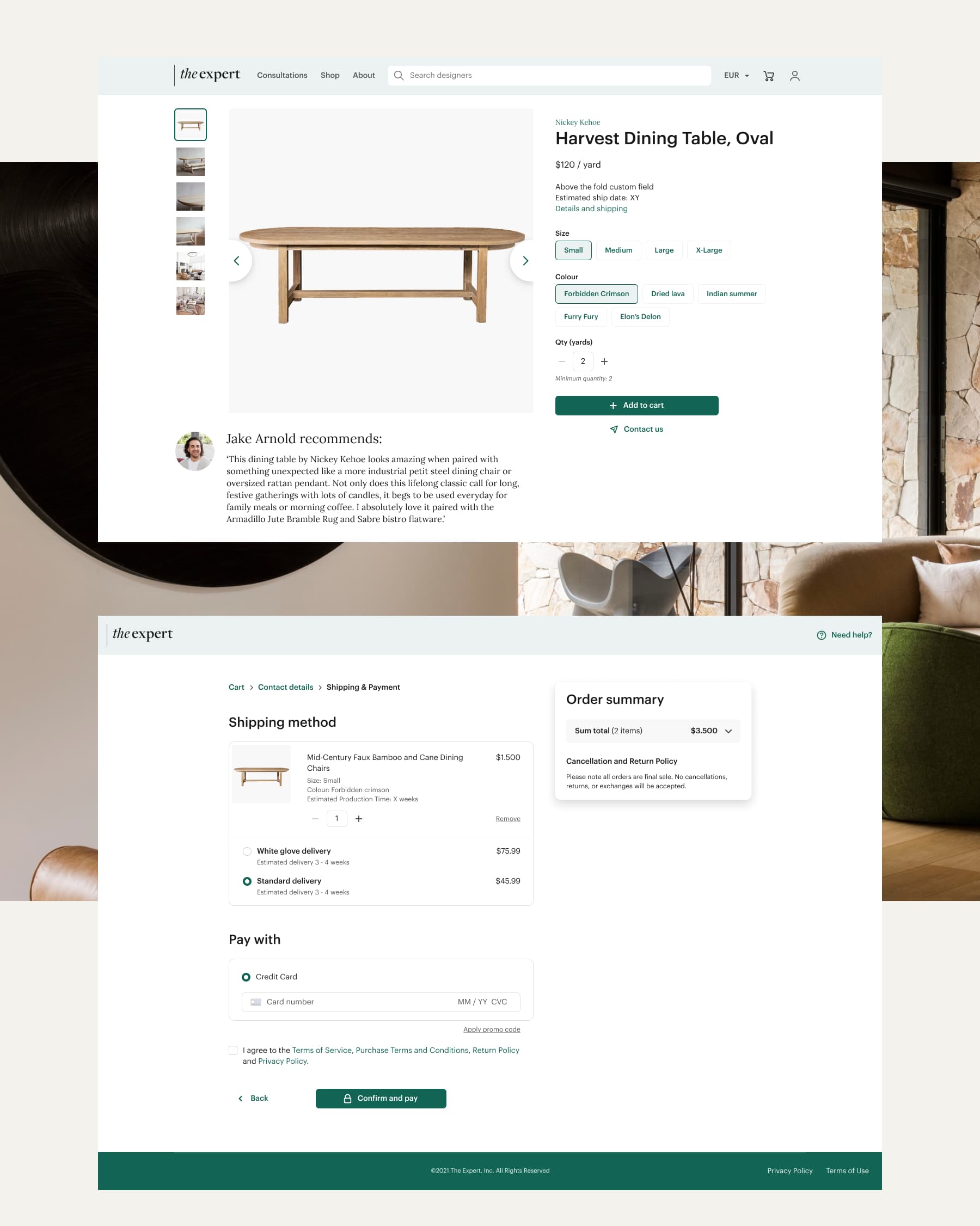
Early on, users seek trust: "Who is behind this brand?" and "What is the price?" As they move deeper, questions become tactical: "What is the shipping cost?" or "Can I get help?" On our marketplace, PDP traffic was high but conversion was low.
The biggest opportunities we saw were in providing more details about the product, quality in-place imagery, the option to see products in a physical store, and returns to close the sale.
6. Credibility sells
When people come across a brand and like its look or content, they naturally start asking why: Why should I buy from this brand? Who’s behind it?
Giving them a place to see the story, the people, and a bit of what happens behind the scenes often fills that missing credibility gap. Whether it’s a solid About page or an active presence through media and social channels, this trust becomes the foundation for selling online. And if your mission resonates, it can even build loyalty early on and make people less price-sensitive from the start.
Using a combination of data and user-informed insights as the best way forward
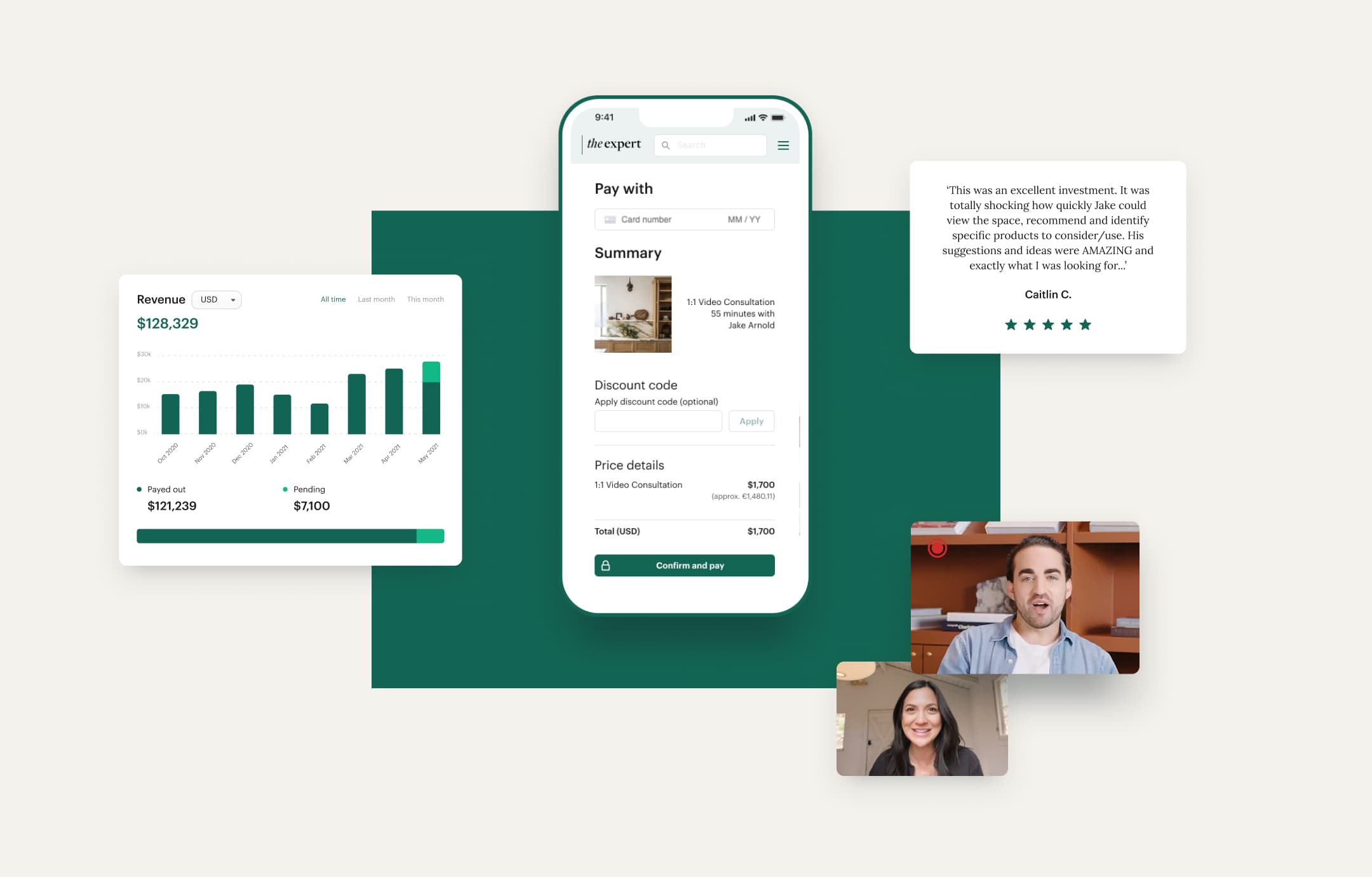
Measuring quantitative data across acquisition, consideration, decision and loyalty phases, knowing what the key target and leading metrics are is one part of the story that helped us uncover the key issue areas. Combined with qualitative, moderated testing, this revealed why a user struggles to convert or what information they were missing as they progressed through their long buying journey.
The Expert launched the marketplace called “Showroom” in January 2023. Since then, the team has been experimenting not just with optimizing the website navigation and search, but also with product selection, marketing channels, shipping, and more.
Credits
Team Expert, including Jake Heddaeous and Anthony McGhee; and team Sudolabs, including Jozef Petro, Ales Glomb and the engineering team.
More case studies
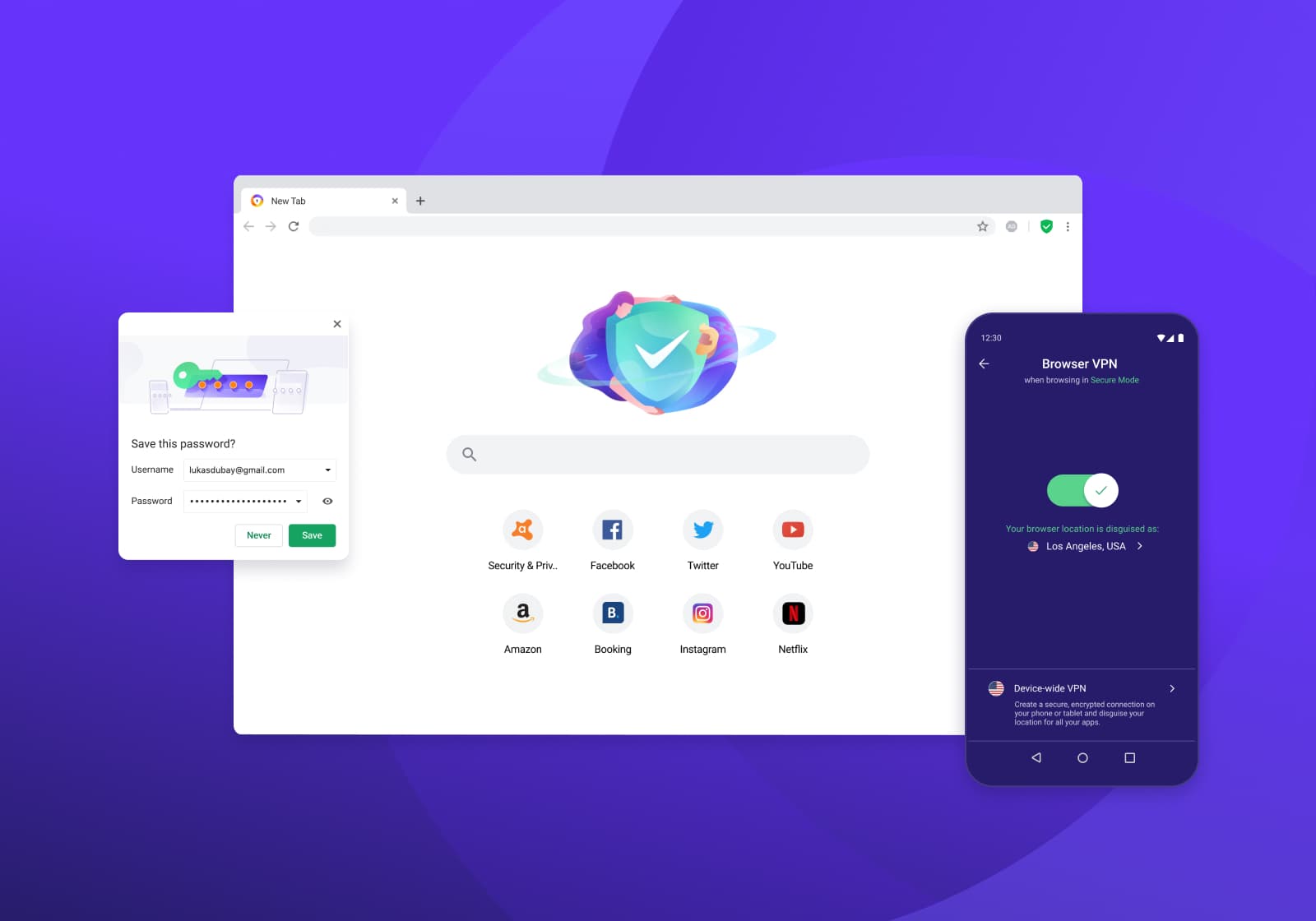
Evolving a cross-platform security product, reaching a 20 million strong userbase / Avast Secure Browser
Security · Cross-platform
Validating a low-code approach to real-time AI and data transformation / Fleak
Data streaming · AI Workflows
Navigating traction: AI web builder turned sales content automation / Scene
AI web builder · Sales automation