Navigating traction: AI web builder turned sales content automation / Scene
10+
First enterprise clients
No. 3
Product of the day
10+
First enterprise clients
No. 3
Product of the day
Scope
- Product Strategy
- UX/UI Design
- Value proposition
- Product Discovery
- Brand
- Go-to-market
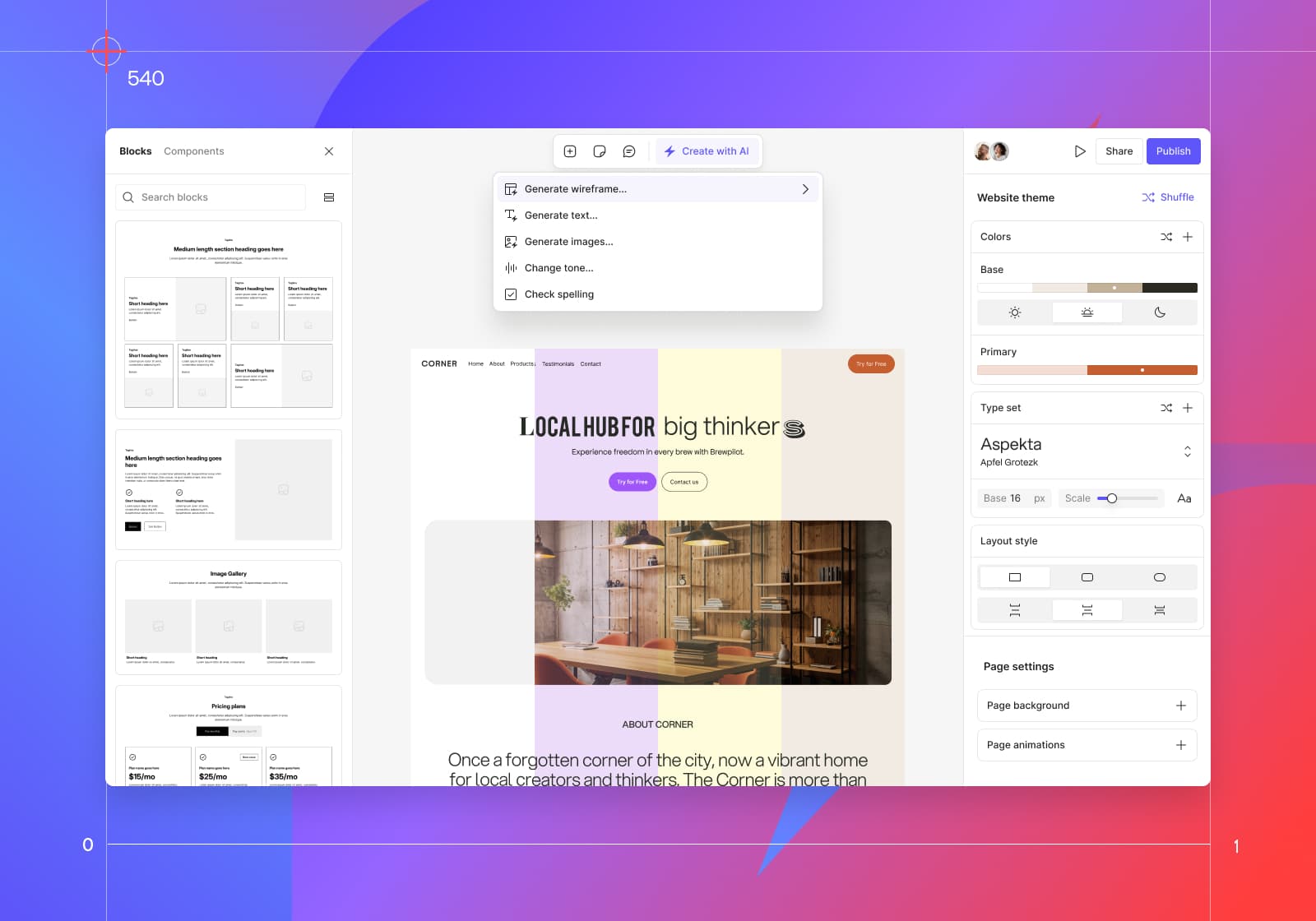
Scene helps agency sales teams turn post-call follow-up content into an AI-automated, personalized follow-up experience. I worked closely with the founders and the design team to find traction for the original product—a horizontal web builder designed to abstract away manual details and speed up website creation—before eventually pivoting toward B2B sales.
I worked as a senior IC partner to the founders, design (kudos to tenacious team at alt-shift for bringing me on board), and an engineering team, covering:
- UX/UI and interaction updates
- Value proposition and messaging
- Customer interviews
- Market research, problem framing and product discovery
- Designing, prototyping and testing
- Go-to-market advisory
The challenge: Finding early traction within a red ocean market
Scene started with an idea of simplifying the complex process of building a website using abstractions over granular control (blocks, global styles) and utilizing AI to speed up the creation. While a good hypothesis to test at a time when the market was dominated by complex tools such as WordPress, Webflow, or Framer, it faced the usual early-stage challenges:
- Value differentiation from popular website builders
- New AI-first building paradigm emergence
- Low traction signals across both self-serve and sales-led acquisition
- Lack of focus on a few vertical use cases
- Unclear ICP - oscillating between designer and non-designer crowds
Fixes to find focus and lower the self-serve adoption barriers
When I joined, I helped shape a short-term roadmap and reassess product direction in response to rapid shifts in the AI web-builder market. Ahead of a Product Hunt launch, we focused on clarity, speed to value, and reduced complexity.
Key initiatives before launch:
- Defined a clear ICP: designers on a deadline
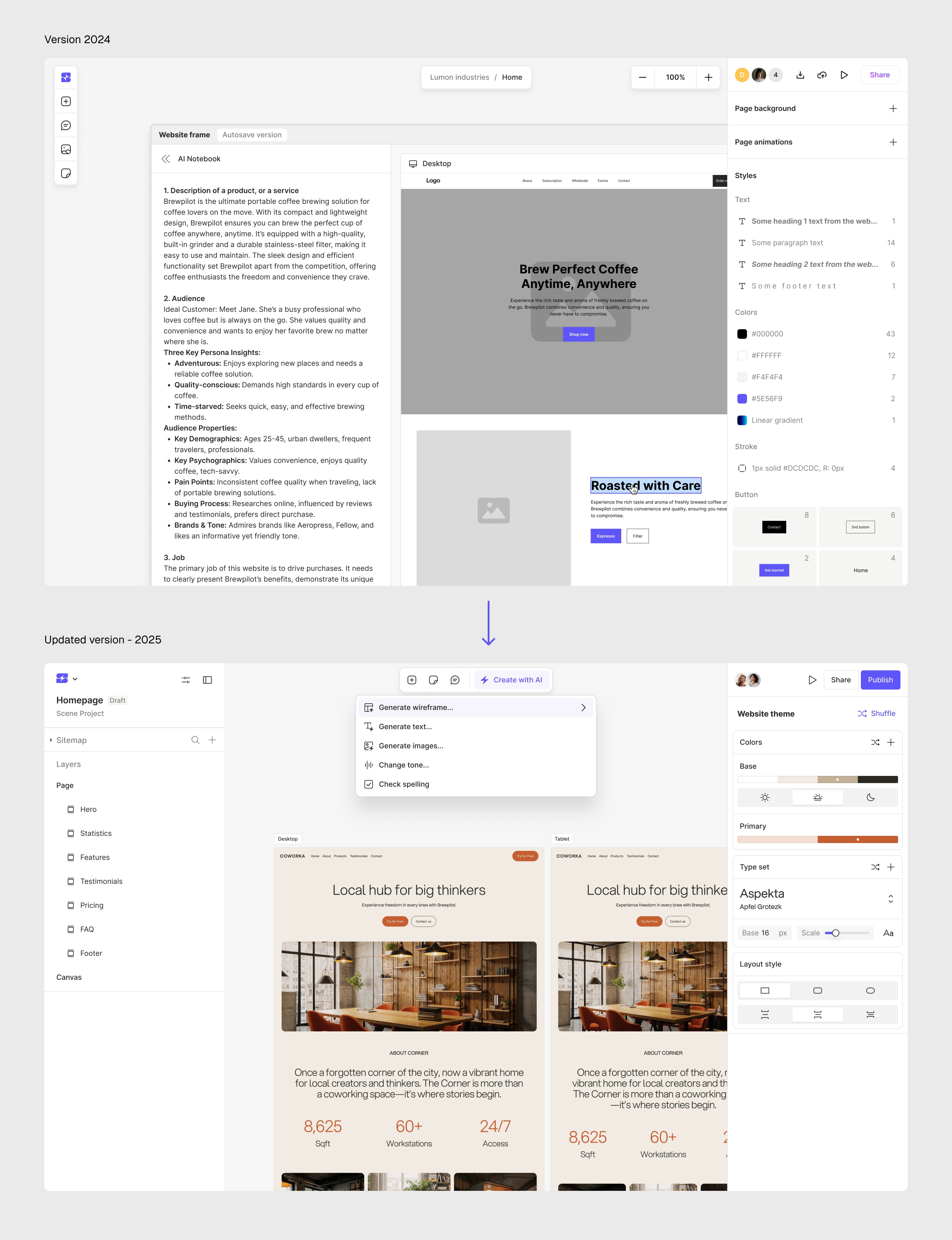
- Revised UI navigation: align with familiar designer mental models
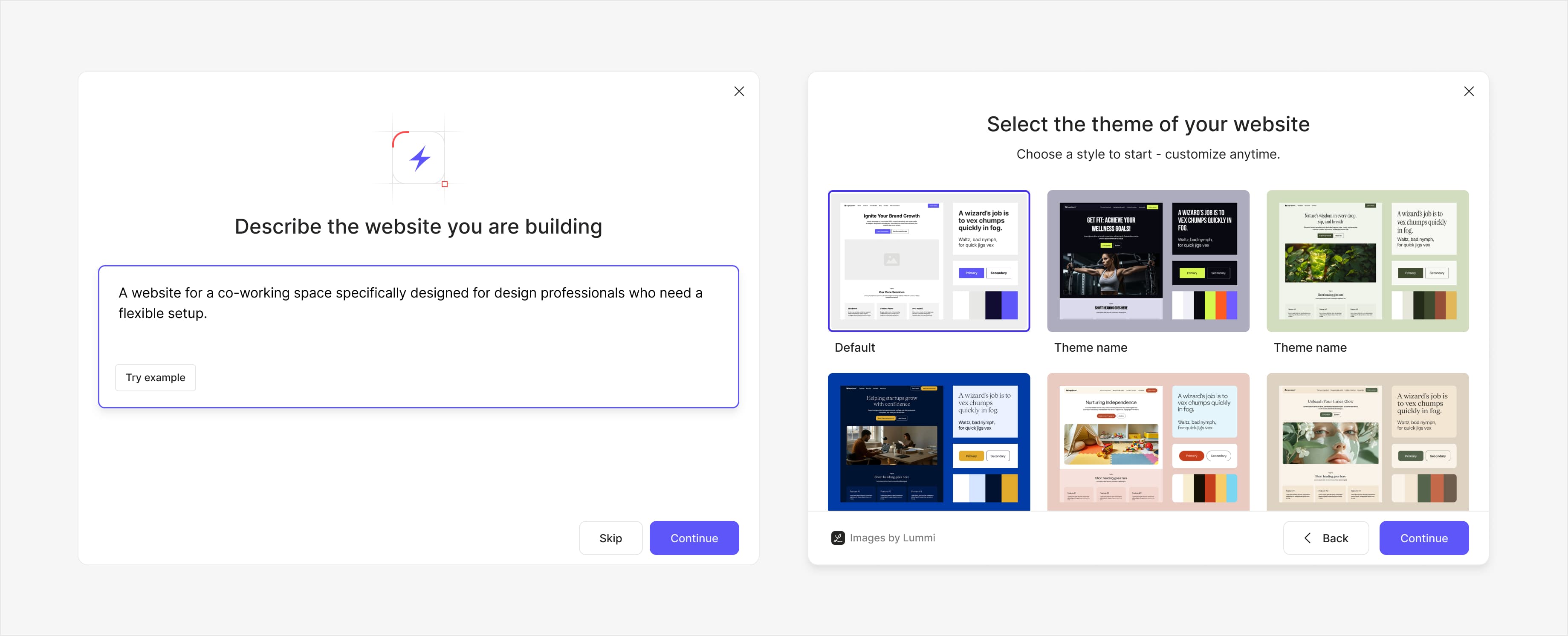
- Introduced a new abstraction layer: AI-powered web for global styles, fonts, and colors as a core new capability
- Dramatically reduced time to value: generating a full, styled page in a single prompt (including images and copy)
- Surfaced deeply nested functionality: to improve feature discovery
- Launched a new website with clearer positioning and updated branding
- Introduced freemium model with highly competitive pricing to lower the barrier to entry as much as possible
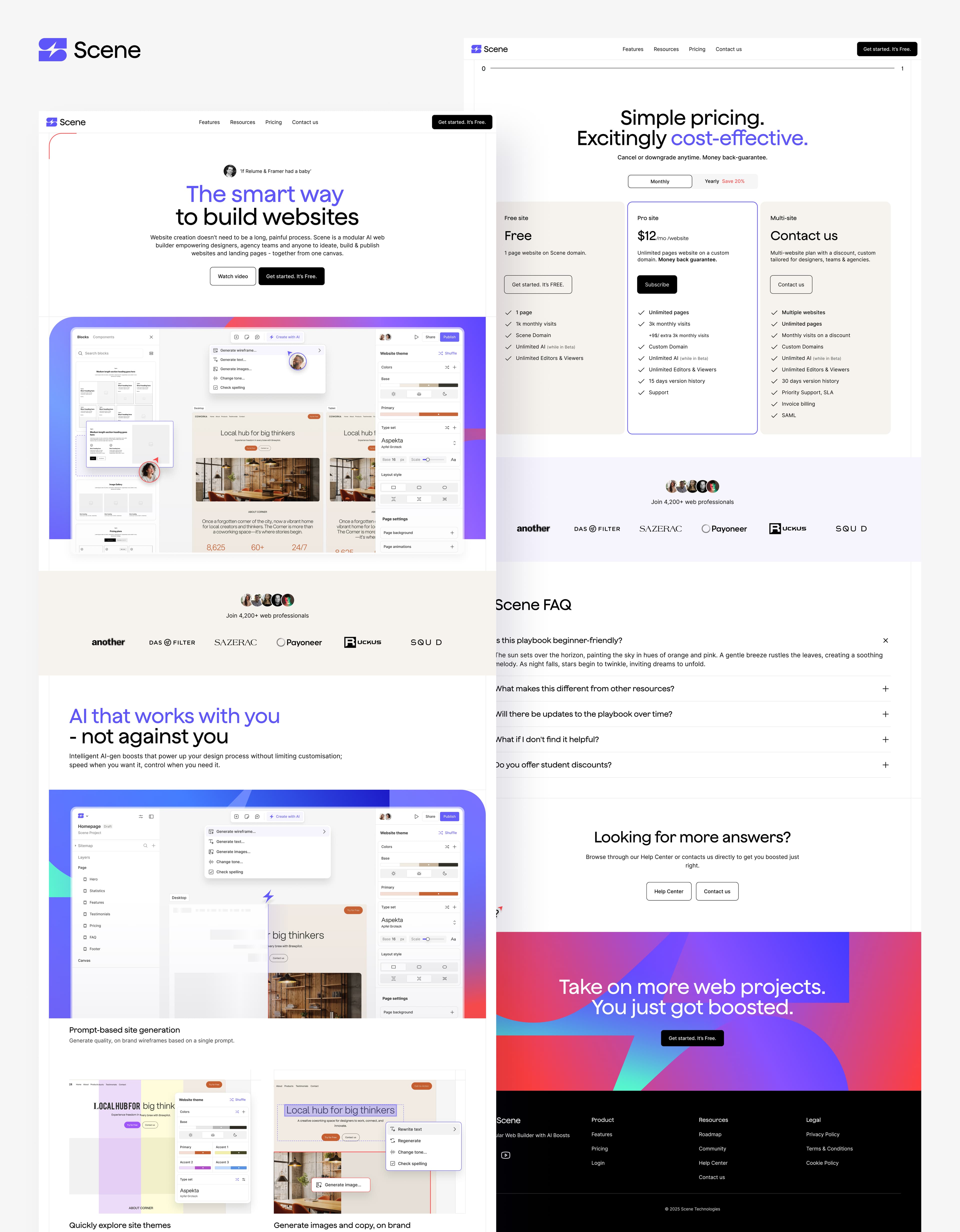
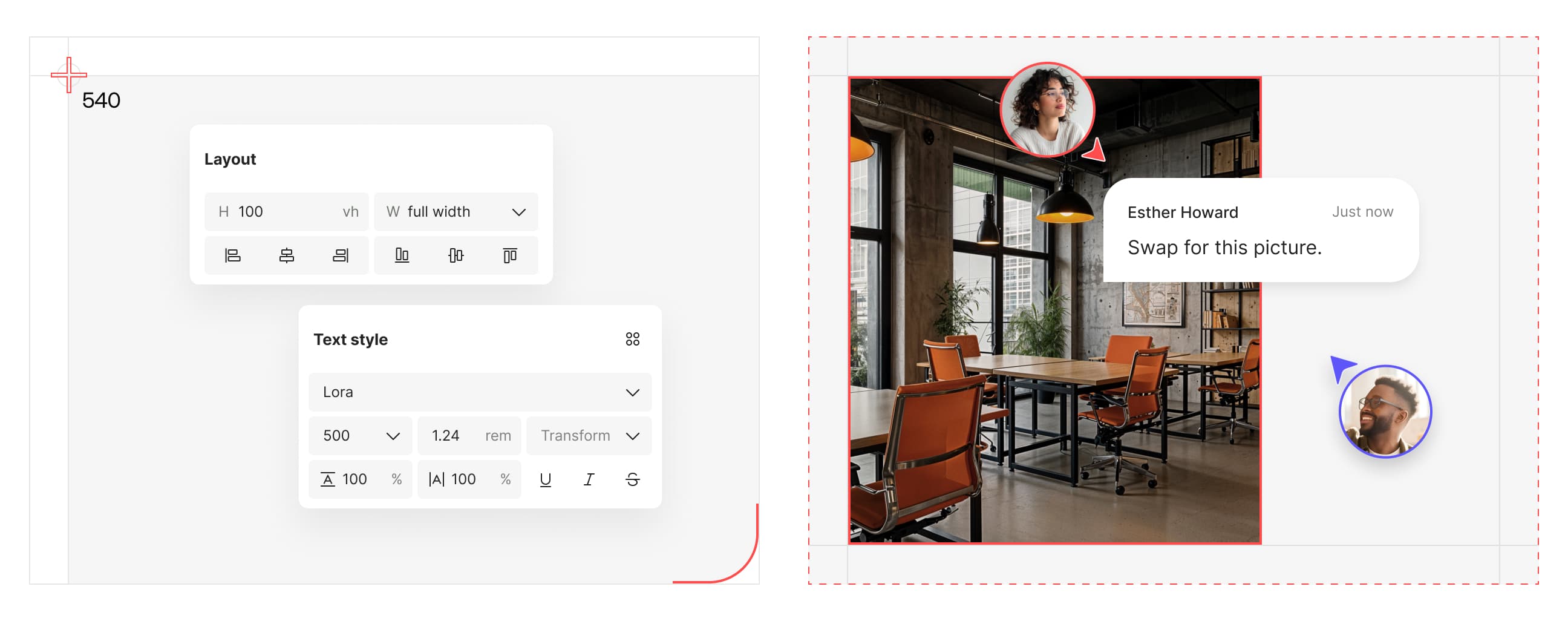
The launch performed well (#3 Product of the Day) and drove a short-term increase in paid users. However, it did not unlock sustained traction. The underlying issue remained: a horizontal tool without a sharply defined use case, while chat-first, AI-native builders proved more compelling to users.
Finding the vertical: Pivoting to sales
As the founders kept talking to their network, the strongest signal for a possible wedge use case came from sales. Through market research and discovery calls, we saw a pattern emerge:
- the pain that the tool could solve was in the sales collateral creation - follow-up presentations, case studies and proposals
- the mid-funnel stage of sales could be a great entry point due to stronger buyer intent, so the tool had a better chance of proving direct impact on ROI
- follow-ups were inconsistent across sales teams, took too long to personalize, and felt ripe for reinvention
AI automation, heavily guardrailed for predictable results at scale
A series of technical decisions were made to make sure that the value of automation and time-to-value was felt soon after each sales follow-up call. By using templates with custom-defined prompts we managed to match the buyer's needs with the seller's value proposition accurately at scale.
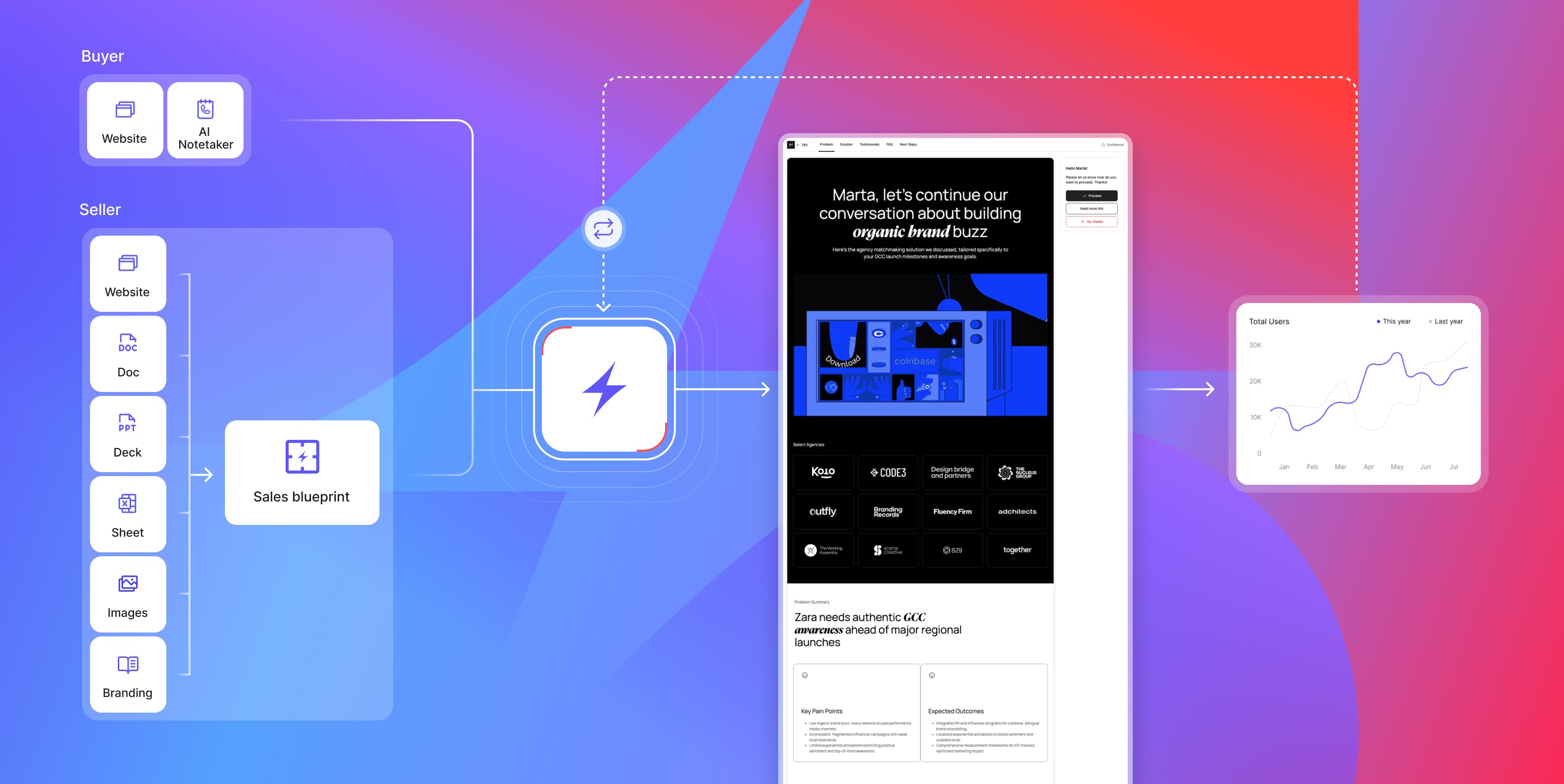
Conceptualization of the sales follow-up page
It took a series of consecutive iterations, prototypes and demoing to prospective clients to shape the direction of the page including its content flow.

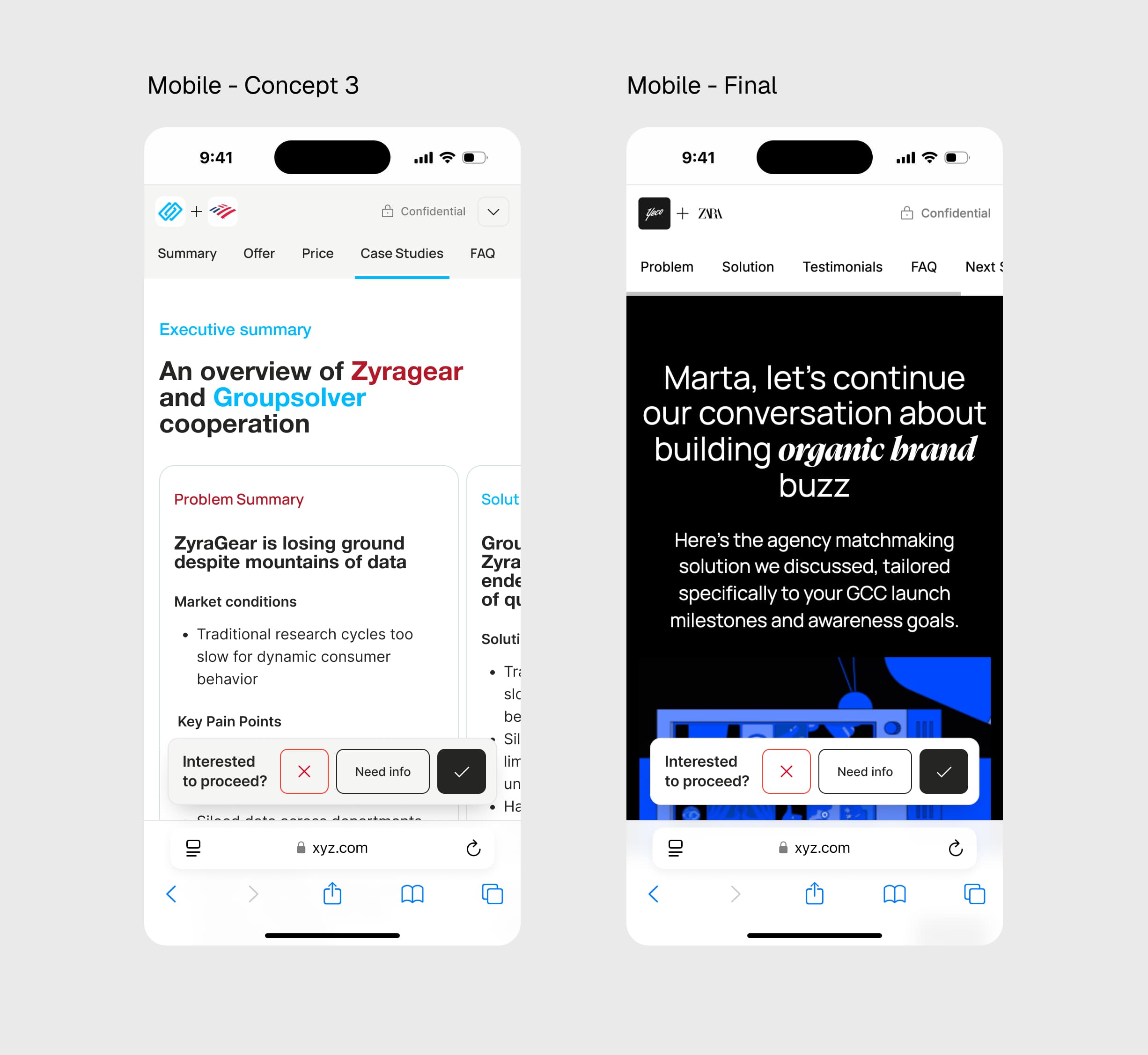
Learning to lead with curiosity over opinion
Scene found its footing by identifying a specific pain point for a specific buyer and user. Scene’s advantage lies in its agility—being leaner than complex market incumbents in the Digital Sales Rooms space and utilizing the founders’ network for high-ticket, sales-led growth. Success here isn’t guaranteed; it’s a race to product-market fit that requires relentless execution and the ability to pivot with the market.
On a personal level, this project reminded me that innovation doesn't always need to follow frameworks and can come from a leap of faith. Leading with curiosity, rather than defaulting to your own assumptions, is what actually creates the space for a breakthrough.
Thank you for your time!
Credits
Team Scene, including Tomas Vasso and Suresh Kumar; and team alt-shift, including Martin Maricak and Romi Brajer.
More case studies
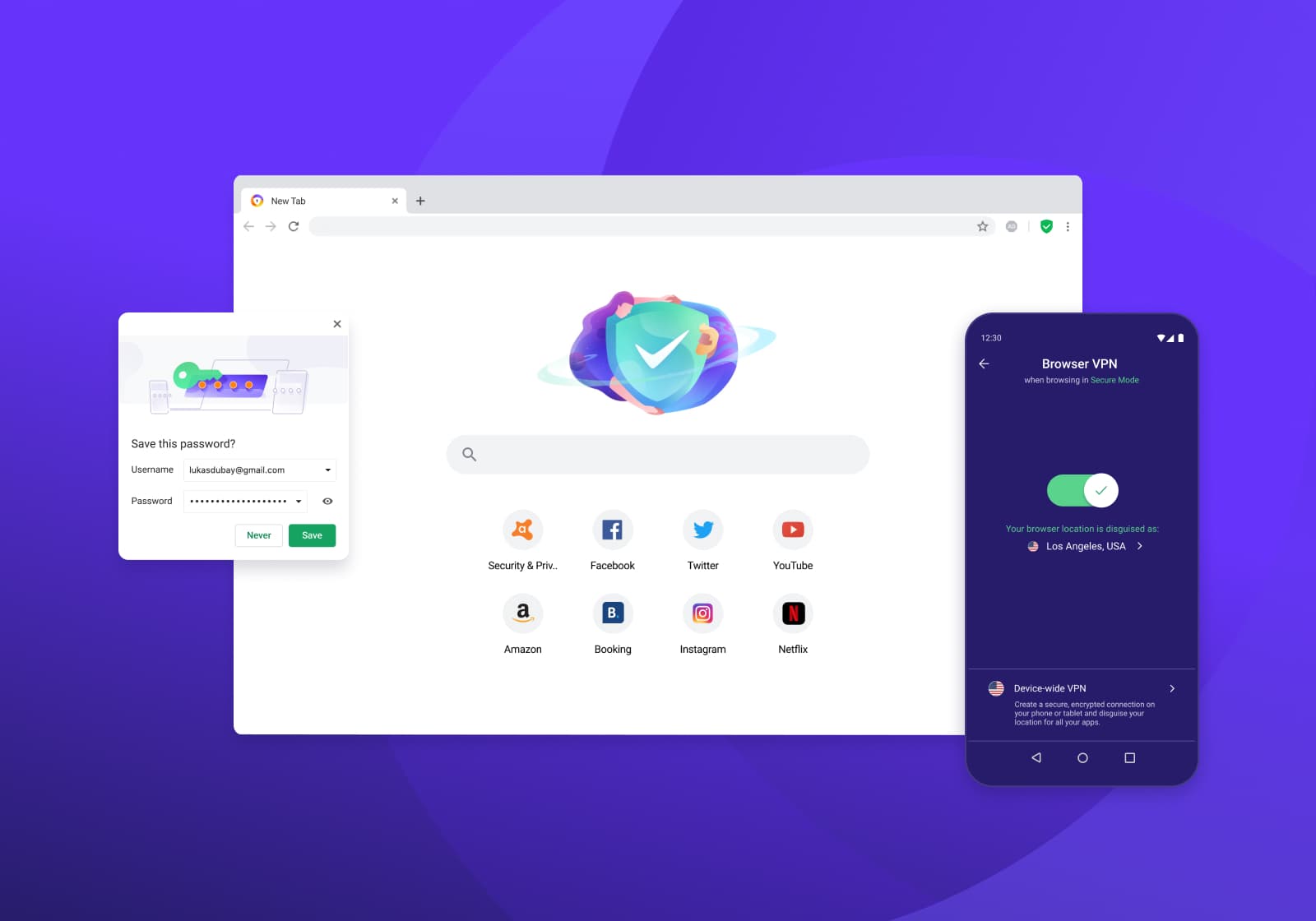
Evolving a cross-platform security product, reaching a 20 million strong userbase / Avast Secure Browser
Security · Cross-platform
Validating a low-code approach to real-time AI and data transformation / Fleak
Data streaming · AI Workflows
Scaling a designer consultation platform with an e-commerce marketplace / The Expert
E-commerce · CMS